

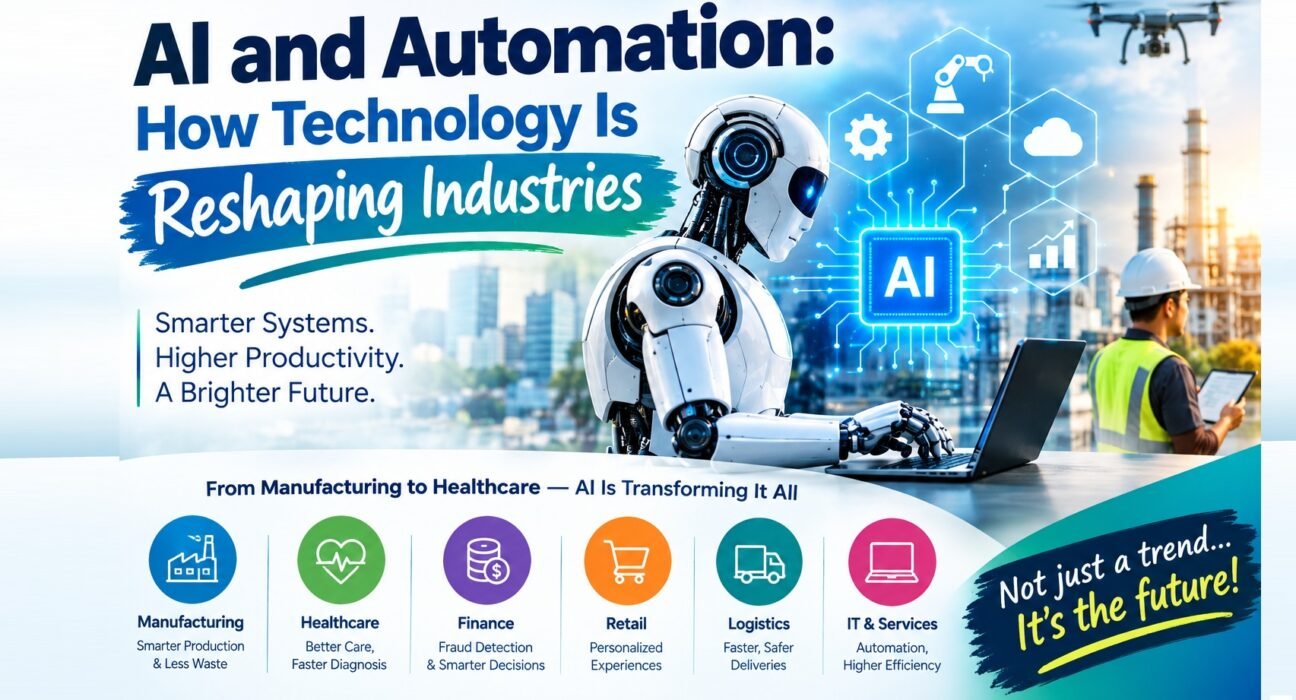
Automation has been around since the first power. What’s different now is the kind of work being automated. Machines used to handle muscle jobs: lifting, stamping, welding. Software now goes after the “eyes and judgment” jobs, like spotting a defect, reading a scan, or deciding which shipment gets rerouted.
That reaches industries that thought they were safe. Here’s how it looks in a few of them.
Factories
A classic factory robot does one motion, over and over. Newer lines add cameras that inspect every part and reject the bad ones. A human inspector gets tired by the thousandth widget. A camera doesn’t, though it’s only as good as the examples it was trained on.
The under-appreciated change is maintenance. Sensors track vibration, heat and noise, and software learns what a healthy machine sounds like. When a motor starts to drift, it raises a flag. Fixing something on a quiet Tuesday costs far less than losing a line on a Friday night.
Hospitals
AI is being tested and used to help read scans, flag suspicious findings and push urgent patients up the queue. It’s a second opinion. The radiologist still signs off.
Honestly, the most useful hospital automation is boring: scheduling, coding for billing, turning a doctor’s spoken notes into text. Doctors complain constantly about paperwork, and anything that gives them ten more minutes with a patient is worth having. Healthcare is slower to adopt than other fields, and given that mistakes can hurt people, I think that’s right.
Banks and insurers
Finance got there early. Routine card payments are approved in a blink, odd activity gets flagged, and simple claims move through with little human input.
The awkward part is explaining decisions. If software rejects your loan, you’re owed a reason, and “the model said so” isn’t one. Regulators are pushing on this, which is slowly pushing banks toward systems they can actually explain.
Farms
John Deere’s See & Spray system is a good example: cameras spot weeds among crops and spray only those, not the whole field. Less chemical, less cost. Drones and soil sensors do similar things for watering.
The catch is price. A small farm can’t easily buy a machine that costs a fortune, so shared and rented equipment matters more than the marketing suggests.
Warehouses and delivery
When a parcel arrives a day early, thank the software nobody sees: routing, packing, stock forecasts for each city. You only notice it when it breaks.
The worker question
It depends, and anyone giving a flat answer is guessing. Repetitive, predictable jobs are most exposed. New jobs appear too: people who maintain these systems, check their output and deal with the strange cases. [YOUR STORY: someone in your industry whose job changed]
People who adapt best lean on what machines are poor at: fixing messy problems, talking to upset customers, working across teams. Employers can help, and the smart ones do, since retraining someone costs less than rebuilding years of experience from scratch.
What doesn’t go away
Small firms often can’t afford any of this. Bad data produces bad decisions, only faster. Connected machines give hackers more to aim at. And when software errs, somebody still has to be accountable.
So what now
Machines take the repeatable work. AI does the pattern-hunting. People drift toward oversight and relationships. How well an industry manages that shift depends less on the technology than on whether anyone planned for the people in it.
FAQs
Automation vs AI?
Automation repeats a fixed task. AI learns from data and can handle cases nobody spelled out. Most modern systems mix both.
Fastest-changing industries?
Manufacturing, finance, logistics and retail. Healthcare is moving more slowly.