

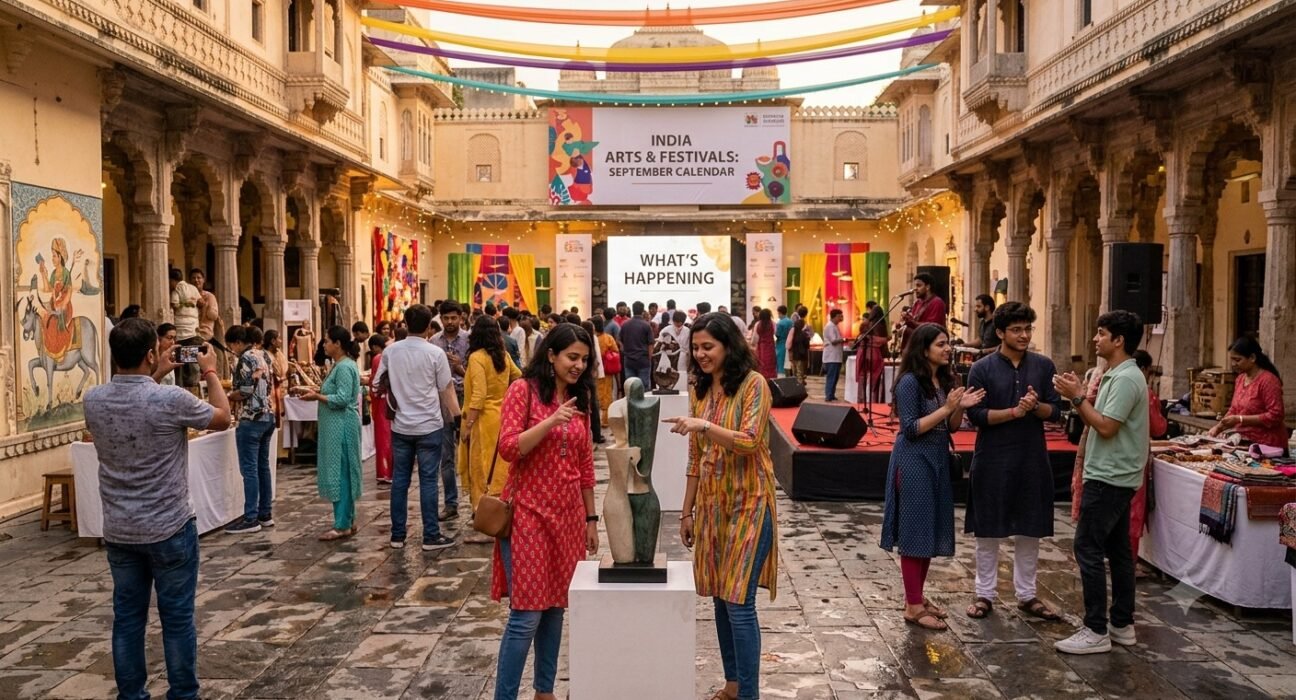
India’s cultural calendar seems to wake up all at once. The monsoon eases, galleries reopen, concert halls start filling back in, and festival grounds begin prepping for the long run-up to Diwali. This year’s version has been unusually packed — and a few of the events happening right now say something bigger about where India’s cultural energy is actually headed.
AR Rahman goes Sufi in Mumbai
The most talked-about event this month is probably Sufiana Safar — Oscar-winning composer AR Rahman’s tribute to Sufi musical tradition, staged at Mumbai’s NCPA. It blends classic qawwalis with some of his own compositions, and it’s a genuinely different experience from his usual film-score-heavy live shows. For longtime fans, it’s a rare chance to hear his work in something closer to a contemplative setting rather than a stadium show built around the hits.
Delhi Art Weekend: a city examining itself
The second edition of Delhi Art Weekend, themed “The Eighth City,” looks at Delhi as a capital that’s literally been rebuilt seven times and still isn’t finished changing. Sounds academic on paper, but events like this have quietly become one of the more important fixtures on India’s cultural calendar — a real platform for artists outside the traditional gallery circuit.
Ziro Festival of Music, and why it deserves more attention than it gets
Held in the Ziro Valley of Arunachal Pradesh, this open-air music festival, set against the northeast’s landscape and Apatani culture, remains one of the more distinctive events on the calendar. It’s not just a nice regional add-on, either. It’s one of the genuine bridges between India’s mainstream cultural conversation which tends to center on Mumbai and Delhi and a region that doesn’t get anywhere near the national attention it deserves.
The old calendar hasn’t gone anywhere
For all the new urban cultural energy, it’s worth remembering the older calendar is still running underneath it, doing most of the actual work. Ganesha Chaturthi, a ten-day celebration honoring Lord Ganesh especially significant in Maharashtra, Tamil Nadu, and Karnataka, fell in mid-September this year, bringing elaborate processions and community feasts across the country. Even as the scene modernizes, this is still what anchors the year for most people governed by lunar and solar cycles that predate any art weekend by centuries.
It’s not staying inside India’s borders, either
Indian cultural festivals are having a real moment abroad too. In Qatar, the Indian Cultural Centre, working with the Embassy of India, hosted Bharat Utsav — a two-day celebration of music, dance, and a cultural bazaar that pulled large crowds from both the expatriate community and local audiences. Similar India Day celebrations played out across the US this year, including Charlotte’s 30th annual Festival of India, which expanded into a two-day “FolkFest” for its milestone edition, alongside comparable events in New York and North Carolina.
Worth sitting with that pattern for a second. Indian cultural diplomacy and diaspora identity are increasingly expressed through these large, public festival formats not just quiet, private community gatherings the way they might have been a generation ago. They’ve become real bridges between India and the places its diaspora has put down roots.
What this month’s lineup actually tells us
Genre-crossing feels increasingly normal now Rahman doing Sufi music instead of film scores, or a festival built around indigenous culture instead of mainstream Bollywood, both point to audiences wanting depth over the familiar. Regional culture’s getting a genuinely bigger platform too; something like Ziro Festival gives places outside India’s usual cultural centers real national visibility, which didn’t really happen at this scale before. And diaspora events are scaling up fast — a multi-decade festival abroad expanding into a multi-day format doesn’t happen unless interest is actually growing, not just holding flat.
If you want to actually keep up with this
Follow city-specific culture publications, not just national outlets a lot of the best events get covered locally well before the bigger sites pick them up. Keep traditional festival season mentally separate from urban event season, since one follows the lunar calendar and shifts every year while the other runs closer to a standard monthly Western calendar. And if you’re outside India but want to stay connected, diaspora community organizations are increasingly where the biggest India-culture events are happening now — not just back home.
Where that leaves us
September 2026’s calendar captures something bigger than one busy month. It’s a country whose cultural output keeps getting more diverse, more regionally representative, and more globally connected — without losing its grip on the traditions that have anchored it for generations.
Sources: India events coverage; regional festival and diaspora event reporting, September 2026.