

New York’s shoreline has had a busy autumn. A major storm forced a coastal flood warning late in September, and smaller flood alerts have popped up since. If you’ve seen the phrase on your phone and wondered what it actually means, this guide breaks it down in plain language.
The Short Answer
A coastal flood warning means the National Weather Service expects serious flooding near the shore, and it is happening or about to happen. It is not a drill, and it is not the same as a gentle “heads up.”
Is There One Today?
I couldn’t confirm an active coastal flood warning for New York City on Monday, October 26. Alerts can change within hours, so confirm on weather.gov/nyc before making plans.
Here is what I did find. On October 21, the Weather Service in Upton issued a coastal flood advisory for southern Nassau County, with up to a foot of water possible in vulnerable spots near the waterfront. Some roads, parking lots and basements near the shore were expected to see minor flooding at high tide. That is an advisory, which is a step below a warning.
Looking farther along the coast, an offshore nor’easter is expected to bring several days of onshore wind and coastal flooding, with advisories running from the Jersey Shore to the Outer Banks. The storm should stay out at sea, so the biggest impacts are expected to the south of New York.
What Does a Coastal Flood Warning Mean?
Officials describe it with a few key ideas. NOAA says a warning is for moderate to major coastal flooding that is happening or about to happen. That wording matters. “Moderate to major” signals real damage, not a little water on the curb.
New York City’s alert system fills in the details. Notify NYC says tides and waves will run higher than normal, some exposed waterfront structures may be damaged, and vulnerable shore roads could flood. It also tells people in the affected area to act to protect themselves and their property.
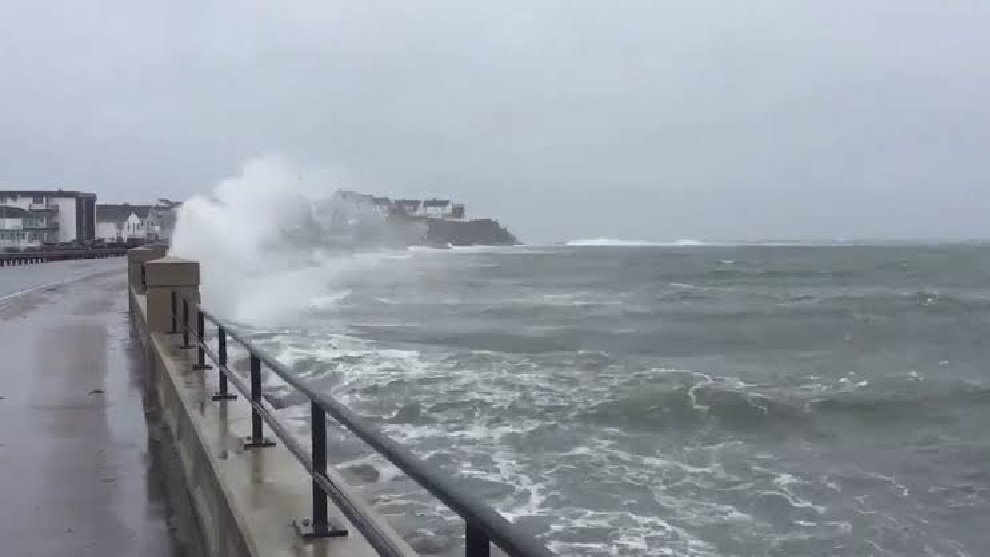
For comparison, here is what a September warning looked like on paper. The Weather Service said a warning was in effect for 1 to 2 feet of water above ground level in vulnerable areas near the shoreline. A foot or two sounds small, but it is enough to flood a basement, swamp a car or close a road.
Where Does the Alert Apply?
Not every New Yorker is in the danger zone. These alerts target low-lying places close to the water. In this city, that usually means:
- Southern Queens, including Howard Beach and the Rockaways
- Parts of Brooklyn along Jamaica Bay and the harbor
- Staten Island’s shoreline
- Low areas of the Bronx on Long Island Sound
- Lower Manhattan near the water
If your home sits uphill and inland, the flood itself may not reach you. Roads and transit still might feel it.
Warning, Watch, Advisory and Statement
Alerts come in four flavors, and the differences matter.
Statement. The mildest. Notify NYC says minor flooding of the most vulnerable shore roads is possible during a coastal flood statement.
Advisory. NOAA describes this as minor or nuisance flooding that is occurring or about to occur.
Watch. This means moderate to major flooding is possible and could be a serious risk. It is a signal to get ready.
Warning. The most urgent. The flooding is here or nearly here.
A simple way to remember it: statements and advisories say “be aware,” watches say “be ready,” and warnings say “act now.” The Weather Service uses very similar wording for general floods, calling a watch “be prepared” and a warning “take action.”
Why Water Rises Without Heavy Rain
People often link flooding with a downpour. On the coast, the ocean does the work. A strong onshore wind can pile water against the shore. If that lines up with a high tide, or a full moon that pushes tides higher, the water spills over.
That is why a dry, sunny day can still come with an alert. In fact, a mid-October forecast discussion noted mostly dry weather but still called for minor coastal flooding along the south shore. It said coastal flood advisories were in effect and that gusty winds and slow-to-settle seas would continue through the end of that week.
Looking Back: The September Storm
A recent example shows how serious a warning can get. On September 25, Governor Hochul declared a state of emergency for eight counties, including all five boroughs, ahead of a coastal storm. One city housing authority worker was killed by a falling tree in Brooklyn. Water a few inches deep covered streets in Howard Beach.
Days later, the situation eased but did not disappear. On September 28, an advisory for southern Queens still called for up to one foot of water above ground. The lesson is that flooding can come in waves, one tide after another.
What To Do When a Warning Is Issued
Local officials come first. These common-sense steps help too:
- Check if you are in a flood-prone zone. Do it before there is an alert.
- Move your car to higher ground. Do it before high tide, not during.
- Raise valuables. Get things off basement floors and low shelves.
- Avoid the water. Surf and rip currents get dangerous. In September, the governor warned that anyone going in or near the water was gambling with their life.
- Don’t drive through floodwater. You can’t tell how deep it is.
- Charge your phone and keep a flashlight handy. Wind can knock out power.
- Follow trusted updates. That means weather.gov/nyc, Notify NYC or 311.
Keeping Up With Changes
Alerts change fast. A watch can become a warning in hours, and a warning can drop back to an advisory when the tide goes out. Avoid old screenshots and forwarded messages. Official sources are the safest bet.
The Takeaway
A coastal flood warning means real flooding is happening or close. It outranks a watch, an advisory and a statement. Nothing confirmed was in place for the city as of today, but the season has already shown how quickly that can change. If your area is named, move your car, protect your belongings and stay clear of the water.
Disclaimer: This article is for general information only and is not an official weather alert. Conditions can change quickly, so always follow the National Weather Service and local officials.