


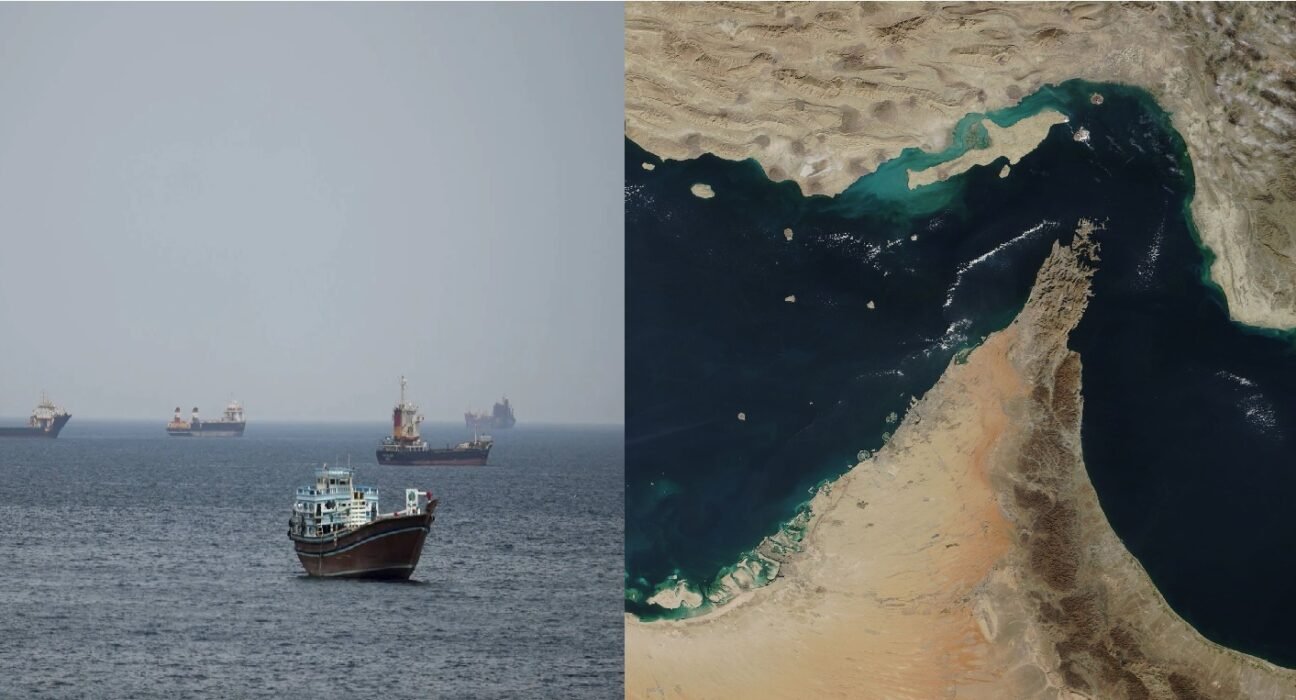
If you’ve been trying to work out whether the Strait of Hormuz is open or closed, the honest answer is that both sides keep saying different things, and the ships themselves tell a messier story. Washington says the waterway is open. Tehran says it’s shut. In reality, tankers are still moving through, but in smaller numbers and under fire.
Here’s what the latest reporting shows, in plain terms.
So, is the Strait of Hormuz closed or open?
Neither word fits well right now. U.S. officials repeat that the strait is open. A State Department spokesperson said this week that the U.S. military has helped thousands of commercial vessels through and facilitated the passage of more than 1.25 billion barrels of crude, despite Iran’s attacks and its claims that the strait is closed.
The ship-tracking data tells a different story. Attacks around the strait hit their highest level since the war began, pushing traffic to its lowest point in more than two months. More than 20 ships crossed on Sunday and Monday, according to Kpler, but that fell to seven on Tuesday and ten on Wednesday. Some caution applies here. Those counts leave out ships that turn off their tracking signals, and preliminary figures are sometimes revised upward later.
For context, this is a long way from normal. U.S. Navy data showed about 32 vessel transits a day on average in the 72 hours before October 4, compared with roughly 125 large commercial vessels a day before the war. So if you want a one-line answer: the strait is partly open, heavily contested, and far quieter than it used to be.
How we got here: Iran closes the Strait of Hormuz
The conflict began on February 28. U.S. and Israeli strikes on Iran started the war, and the months since have brought on-again, off-again flare-ups.
Early on, Iran moved to choke off the waterway. An Iranian brigadier general declared the strait closed, Iran threatened to set ships on fire if they tried to pass, and Maersk suspended all its crossings until further notice. The effect was dramatic. In the first 15 days of the war, only 92 ships made the passage, according to IMF PortWatch.
Since then the picture has swung back and forth. A June interim agreement was supposed to end the fighting and reopen the strait. Goldman Sachs noted at the time that flows might recover to only about 70% of pre-war levels, because Gulf producers were already shifting to alternative export routes. By late August, traffic was climbing again but still weak. USNI News reported that despite the president declaring the strait open, Iran kept firing at ships.
Now the latest chapter. U.S.-Iran talks at last month’s UN General Assembly produced no breakthrough, and a U.S. naval blockade on ships going to and from Iran remains in place. President Trump said the U.S. won’t attack Iran before the November 3 midterms, but that the blockade stays in full force.
Why the “illegal route” matters
Part of the fight is about which lane ships use. Iran insists ships hug the Iranian coast and calls the southern route along Oman’s coast illegal, while the U.S. Navy has been escorting merchant ships along that southern route, many with transponders off. That choice has consequences. The UK maritime monitor counted 59 incidents involving commercial shipping since July 6, and 41 of them were on the southern route. The International Maritime Organization says a ship has been struck in or near the strait almost every day this month.
Two incidents from this week show what’s at stake. A tanker called On Peace was hit off Oman, and India’s foreign ministry said 12 of its 19 crew were injured, including 11 of the 17 Indian nationals on board. Another tanker, the Acers, was struck off Qatar, and casualties were reported. One caveat: in several cases, nobody has claimed responsibility, and Iran’s Revolutionary Guard claim on a gas carrier could not be independently verified.
Strait of Hormuz tanker crew pay: the danger bonus
This is where the human side comes in. Somebody has to sail these ships, and the money on offer has become eye-catching.
Tanker captains are being offered up to $100,000 a month, plus a $50,000 bonus for each Hormuz crossing, according to the Financial Times, versus about $15,000 a month normally. The pay isn’t only for officers. Ordinary crew normally earn around $1,500 a month, and are now getting at least four to six times that on Hormuz transits. The Wall Street Journal reported one staffing company offering as much as $25,000 for a round trip, which for oilers and cadets could be more than a year of wages.
It’s easy to read that as a windfall. The unions don’t. Manoj Yadav of the Forward Seamen’s Union of India told the FT that some crew who don’t want to enter the danger zone are being pressured to go, and that repatriation costs could be taken out of their wages. He put it bluntly to ABC: “It is the seafarers that pay the price.”
The risk is not hypothetical. The IMO says at least 24 seafarers have been killed across 93 confirmed incidents. There is also a rule that’s supposed to protect workers. With Hormuz designated a war-like operations area, seafarers have the right to refuse to sail and be repatriated at the company’s expense, though replacing crew who leave can take weeks.
Strait of Hormuz oil volume estimates: why the numbers don’t match
Ask five analysts how much oil is moving through Hormuz and you’ll get five answers. That isn’t always bad faith. A lot of it comes down to what’s being counted, and how.
The baseline. In 2025 the strait carried roughly 20 million barrels a day of crude and products, about a quarter of global seaborne oil trade. Some trackers use a lower baseline, so percentages differ. Kpler’s pre-war benchmark was 17.1 million barrels a day.
The bypass routes. Gulf producers have been quietly rewiring their exports. Exports from the Gulf of Oman and Red Sea have risen to 6.7 million barrels a day, twice the pre-war level, per Kpler. Kpler says roughly four of every ten barrels of crude now leave the region without going through Hormuz. The “shuttle system” helps too. Ships carry oil out through the strait, often with tracking off, then transfer it ship-to-ship in the Arabian Sea.
Why the government and the trackers argued. Back in August, the dispute got loud. Energy Secretary Chris Wright said 8 to 9 million barrels a day were moving through the strait, and said commercial trackers couldn’t see the full picture because many vessels run with transponders off under military escort. Tracking data at the time suggested flows out of Hormuz were at best about half what Wright cited. Both sides had a point: dark transits are real, but so is the gap.
The takeaway: total oil leaving the Gulf region is near pre-war levels, but the strait itself is carrying less. That’s an adjustment, not a recovery.
What to watch next
A few things will decide how this plays out. First, whether the attacks keep spreading deeper into the Gulf. This week’s strikes off Qatar and the UAE widened the threat beyond the strait itself. Second, whether the blockade and Iran’s transit rules get any diplomatic off-ramp. Third, whether crews keep accepting the danger pay, or start refusing to sail.
For now, the strait is neither the sealed-off chokepoint some headlines suggest nor the open highway some officials describe. It’s a dangerous, expensive, and still-working shipping lane.
Read more details at Here