


Most people driving through southeastern Arizona never plan to stop at Chiricahua. It’s a long way from Phoenix and Tucson, and it doesn’t have the name recognition of the Grand Canyon. That might be about to change.
Congress has now sent a bill to the president that would turn Chiricahua National Monument into Chiricahua National Park. The Senate passed it on September 30, and it landed on the president’s desk in mid-October. He has ten days, not counting Sundays, to sign or veto it. If he does nothing while Congress is in session, it becomes law anyway. I couldn’t find any report of a signature yet, so as I write this, it’s still a waiting game.
How we got here
This wasn’t a quick process. Earlier versions of the bill stalled in the last Congress and never finished the journey. Supporters tried again, and the House passed the new version in March 2026. If the president signs, it would be the country’s 64th national park and the first new one in Arizona since Saguaro got upgraded back in 1994.
It’s worth being clear about what actually changes. Not much, on paper. The land is already protected, and the National Park Service already runs it. The agency itself testified that the rename fits how parks are named across the system, given how much natural and cultural history the place holds. Nothing gets bigger. It’s mostly a new title.
Why people love this place
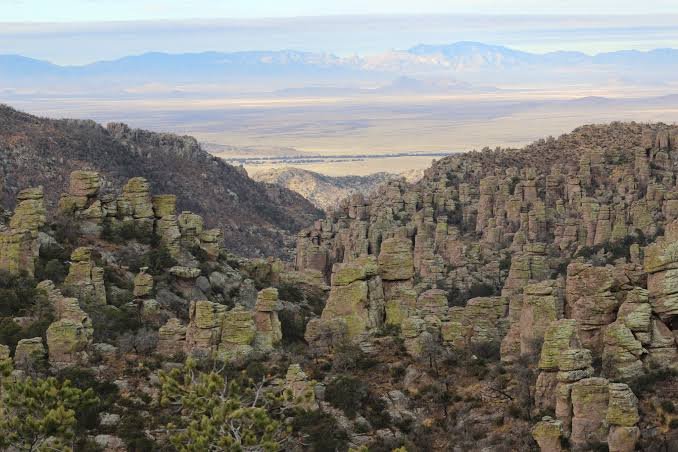
Picture a forest full of stone towers. Some are skinny like chimneys. Others balance huge boulders on top as if someone set them there by hand. That’s the “Wonderland of Rocks” that gives the monument its nickname.
Nature did it slowly. The formations come from a massive volcanic eruption roughly 27 million years ago, and the hardened ash has been wearing away ever since. Twenty-seven million years is hard to wrap your head around, but standing next to one of those columns gets you a little closer.
Native peoples have long called the area the Land of Standing-Up Rocks, which is a much better name than anything I could come up with. And there’s more wild land here than you’d expect. Around 85 percent of it is protected as wilderness.
It’s a human story, too
The scenery tends to get all the attention, but people have lived and worked here for a very long time. The site holds traces of ancient peoples, Chiricahua Apaches, Buffalo Soldiers, ranchers and pioneers, and the Civilian Conservation Corps crews of the 1930s. A lot of the trails and stonework visitors enjoy today came from those CCC workers.
That history is also why the name change isn’t simple for everyone. Several Apache tribes have historically not supported the park designation. The bill protects tribal access for traditional ceremonies, and San Carlos Apache leaders did not take a formal position. If you go, read the signs and learn whose homeland you’re walking through. It makes the trip feel different.
The honest worry
Backers say the upgrade will bring visitors, jobs and money to a rural corner of the state. Willcox’s mayor called it an incredible day for the whole region. I understand the excitement. Small towns near big landmarks often struggle, and a famous name can help.
But there’s a catch. A new title brings visitors faster than it brings funding. Some critics point out the bill doesn’t require any new money or changes to how the place is managed. And the Park Service has lost a lot of staff recently, while officials wouldn’t say whether more people would be hired for the extra crowds.
So here’s my take, for what it’s worth: the name matters less than what happens next. If the crowds arrive and the trails, restrooms and rangers don’t keep up, the place could suffer. If the park gets proper support, this could be a really good thing for everyone involved.
If you want to visit
A few simple things to keep in mind:
Summers are brutal, and afternoon storms can come in fast, so spring and fall are easier. Bring more water than you think you need. The trails are rocky and uneven, so good shoes beat sneakers. Weekdays should be quieter, especially once word gets out. And before you drive out there, check the National Park Service website, because roads, trails and fees can change, particularly during a switch like this.
Please stay on the marked paths and leave the rocks and plants alone. Those formations took millions of years to make. They don’t need help from us.
Add your own detail here
(This is where your real experience goes. Even two or three sentences about a trip, a trail you walked or a photo you took will make the article more trustworthy to readers and to Google. If you haven’t visited, a short quote from a local guide or ranger works well too.)
Final thought
Whatever the paperwork says, Chiricahua has been remarkable for a very long time. A new label won’t change the rocks. It might change how many of us show up to look at them, and that’s the part worth watching.